

Hacemos que la IA sea útil para todos, incluido el planeta
26 millones de toneladas de Carbono
En 2024, cinco de nuestros productos con IA permitieron a personas, y ciudades reducir colectivamente un estimado de 26 millones de toneladas métricas de carbono (tCO2e)¹, cifra equivalente a las emisiones del consumo anual de energía de más de 3.5 millones de hogares en EE. UU.² Para dar contexto, las emisiones totales de Google basadas en nuestros objetivos en 2024 fueron de 11.5 millones de tCO2e³.
Conozca más sobre nuestro 10º informe medioambiental.Nuestros productos, tu impacto
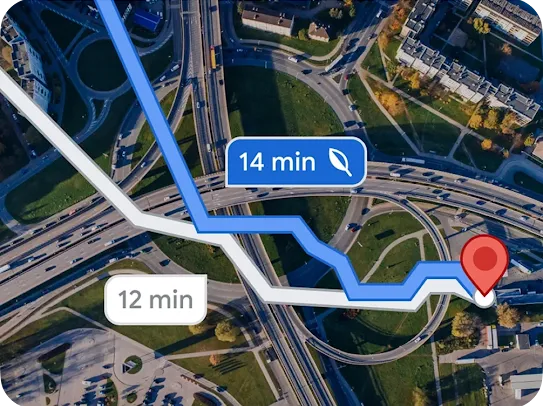
Toma la ruta con ahorro de combustible

Productos diseñados para durar
Comprometidos con el desarrollo responsable de la tecnología

Pixel, el primer smartphone libre de plástico llega a México

Project Greenlight optimiza semáforos con IA reduciendo el tráfico y el CO2

3 maneras en las que la IA impulsa comunidades y ecosistemas más prósperos
1 To estimate aggregate enabled emissions reductions, we first estimated reductions for five products individually (Google Earth Pro, Solar API, Nest thermostats, fuel-efficient routing, and Green Light) and then combined the totals. For Solar API, we used the enabled emissions reductions following the annual (rather than lifetime) accounting basis. For details about the individual calculation methodologies, refer to our 2025 Environmental Report.
2 “Greenhouse Gas Equivalencies Calculator,” U.S. Environmental Protection Agency, November 2024, accessed June 2025.
3 We use the term “ambition-based” to describe the subset of emissions from our total carbon footprint that are within the boundaries we’ve set for our climate ambitions. For more details, refer to our 2025 Environmental Report.
4 Google uses an AI prediction model to estimate the expected fuel or energy consumption for each route option when users request driving directions. We identify the route that we predict will consume the least amount of fuel or energy. If this route is not already the fastest one and it offers meaningful energy and fuel savings with only a small increase in driving time, we recommend it to the user. To calculate enabled emissions reductions, we tally the fuel usage from the chosen fuel-efficient routes and subtract it from the predicted fuel consumption that would have occurred on the fastest route without fuel-efficient routing and apply adjustments for factors such as: CO2 e factors, fleet mix factors, well-to-wheels factors, and powertrain mismatch factors. This figure covers estimated enabled emissions reductions for the calendar year, from January through December. Enabled emissions reductions estimates include inherent uncertainty due to factors that include the lack of primary data and precise information about real-world actions and their effects. These factors contribute to a range of possible outcomes, within which we report a central value. The data and claims have not been verified by an independent third-party.
“Greenhouse Gas Equivalencies Calculator,” U.S. Environmental Protection Agency, November 2024, accessed June 2025.